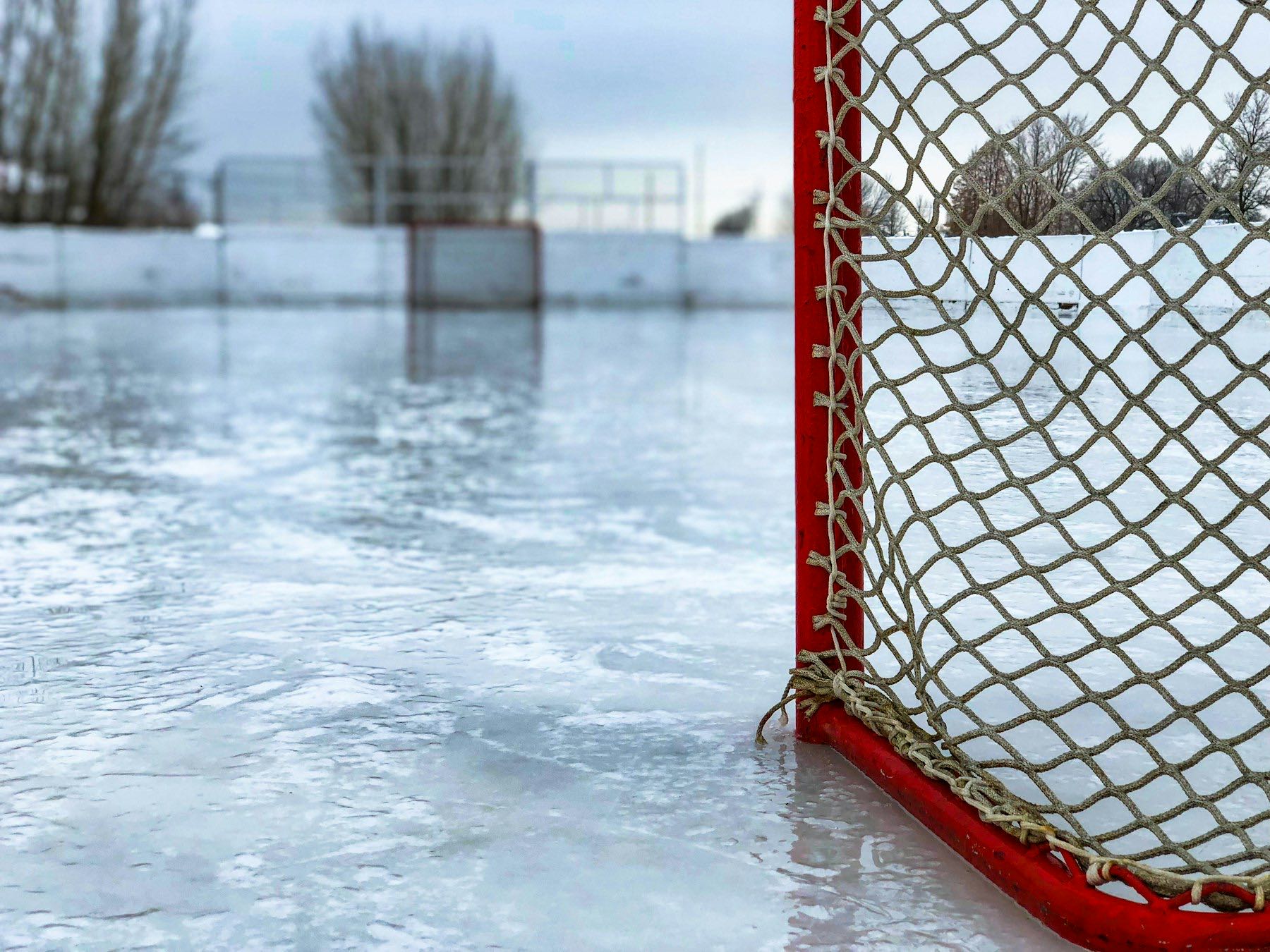
An outdoor rink and an empty goal — where everyone's first shift happens.

Never too late.
Never too early.
Nie zu spät.
Nie zu früh.

What it actually takes to start playing ice hockey — for the eight-year-old at a try-hockey day and the thirty-five-year-old who always wanted to. No gatekeeping, no shortcuts. Seven things, in order.

Was es wirklich braucht, um mit Eishockey anzufangen — für die Achtjährige beim Schnuppertraining genauso wie für den Fünfunddreißigjährigen, der schon immer wollte. Kein Gatekeeping, keine Abkürzungen. Sieben Dinge, der Reihe nach.

CourageMut

Just goEinfach hingehen

The hardest part of ice hockey is walking into the rink the first time. Here's the secret: nobody there cares that you can't do it yet. Every single person on that ice was once terrible at this — it's the sport's founding memory. Kids' try-hockey days exist exactly for this, and adult beginner groups are full of people who started at 25, 35, 45.

Das Schwerste am Eishockey ist, das erste Mal in die Halle zu gehen. Das Geheimnis: Es interessiert dort niemanden, dass du es noch nicht kannst. Jeder Mensch auf diesem Eis war irgendwann grottenschlecht — so fängt dieser Sport für jeden an. Schnuppertrainings für Kinder gibt es genau dafür, und Hobbygruppen für Erwachsene sind voller Leute, die mit 25, 35 oder 45 angefangen haben.

Do this week: find your nearest rink, look up its public skating times, and just go stand on ice once. That's the whole first step. Diese Woche: nächste Eishalle raussuchen, öffentliche Laufzeiten checken und einfach mal rauf aufs Eis. Mehr ist der erste Schritt nicht.
First skillErste Fähigkeit

Skating before everythingErst Schlittschuhlaufen

Hockey is a skating sport that happens to involve a puck. Before sticks and slapshots: public skate sessions, rental skates, falling down, getting up. Learn to stop both ways, skate backwards a little, and get comfortable being uncomfortable. Many rinks run learn-to-skate courses — the fastest money you'll ever spend on this sport.

Eishockey ist ein Schlittschuhsport, bei dem zufällig ein Puck im Spiel ist. Vor Schläger und Schlagschuss kommen: öffentliches Eislaufen, Leihschlittschuhe, hinfallen, aufstehen. Lerne, in beide Richtungen zu bremsen, ein bisschen rückwärts zu fahren — und dich wohlzufühlen, wenn es sich wackelig anfühlt. Viele Hallen bieten Eislaufkurse an: das am besten investierte Geld in diesem Sport.

RealityRealität

Time & travelZeit & Wege

Ice is scarce. Practices happen at 6 a.m. or 10 p.m., the rink is rarely around the corner, and a "one-hour practice" is a three-hour outing with gear and drive. Plan for it honestly: one or two ice slots a week is a great start — and the driveway, the garage and the cellar are open 24/7. Shooting and stickhandling at home is where most development actually happens.

Eiszeit ist knapp. Training ist um 6 Uhr früh oder 22 Uhr abends, die Halle liegt selten um die Ecke, und aus „einer Stunde Training“ werden mit Ausrüstung und Fahrt schnell drei. Plane ehrlich: Ein bis zwei Eiszeiten pro Woche sind ein starker Anfang — und Einfahrt, Garage und Keller haben rund um die Uhr geöffnet. Schießen und Stickhandling zu Hause ist der Ort, an dem Entwicklung wirklich passiert.

The long gameDas lange Spiel

Patience — years, not weeksGeduld — Jahre, nicht Wochen

Nothing in hockey comes fast. Your first crossover takes months; your first clean backhand upstairs takes longer. Plateaus are normal and they lie to you — you're still improving through them. The fix is making slow progress visible: count your shots, time your drills, write it down. Small honest numbers beat big vague feelings.

Nichts im Eishockey kommt schnell. Der erste saubere Crossover dauert Monate, die erste Rückhand unter die Latte länger. Plateaus sind normal — und sie lügen: Du wirst auch mittendrin besser. Das Gegenmittel ist, langsamen Fortschritt sichtbar zu machen: Schüsse zählen, Drills stoppen, aufschreiben. Kleine ehrliche Zahlen schlagen große vage Gefühle.

EquipmentAusrüstung

Gear, without going brokeAusrüstung, ohne arm zu werden

The full kit looks intimidating; the buying strategy isn't: buy used everywhere it's safe, new where it touches safety and fit. Clubs often lend starter kits and run gear swaps — ask before buying anything. Two things matter more than any brand: skates that truly fit, and keeping them sharpened (every 12–16 hours of ice or so — Compete counts it down for you).

Die komplette Ausrüstung sieht einschüchternd aus — die Kaufstrategie ist es nicht: Gebraucht kaufen, wo es sicher ist; neu, wo es um Sicherheit und Passform geht. Vereine verleihen oft Starter-Sets und organisieren Ausrüstungsbörsen — erst fragen, dann kaufen. Zwei Dinge zählen mehr als jede Marke: Schlittschuhe, die wirklich passen, und regelmäßiges Schleifen (etwa alle 12–16 Stunden Eiszeit — Compete zählt es für dich runter).

Helmet + cageHelm + GitterBuy newNeu
SkatesSchlittschuheFit firstPassform!
Protective cupTiefschutzBuy newNeu
Shin guardsSchienbeinschonerUsed is fineGebraucht ok
Elbow padsEllbogenschonerUsed is fineGebraucht ok
Shoulder padsSchulterschutzUsed is fineGebraucht ok
GlovesHandschuheUsed is fineGebraucht ok
PantsHoseUsed is fineGebraucht ok
StickSchlägerCheap firstErst günstig
Neck guardHalsschutzOften requiredOft Pflicht
Ballpark: a full used starter kit is realistic at €150–300; new, €450–900. Kids outgrow gear yearly — used markets and club swaps are the norm, not the exception. Hausnummer: Ein komplettes gebrauchtes Starter-Set ist ab ca. 150–300 € realistisch; neu 450–900 €. Kinder wachsen jährlich raus — Gebrauchtmärkte und Vereinsbörsen sind die Regel, nicht die Ausnahme.

Full gear checklist — fit, specs & brands Komplette Checkliste — Passform, Werte & Marken
CommunityGemeinschaft

Find your peopleFinde deine Leute

You can't play hockey alone forever. For kids: the local club's youth program — most run open try-out days every season and lend gear for the first weeks. For adults: beginner and hobby groups, learn-to-play programs, late-night pickup skates. The rink's notice board and the person sharpening skates know everything — ask them.

Eishockey allein funktioniert auf Dauer nicht. Für Kinder: die Nachwuchsabteilung des örtlichen Vereins — fast alle bieten jede Saison Schnuppertage an und verleihen anfangs Ausrüstung. Für Erwachsene: Anfänger- und Hobbygruppen, Late-Night-Eiszeiten, offene Läufe. Das Schwarze Brett der Halle und die Person am Schleifstand wissen alles — einfach fragen.

HonestyEhrlichkeit

Money, honestlyGeld, ehrlich

Hockey isn't the cheapest sport — but starting costs less than its reputation says, and most of the cost curve is optional for a long time. Rough annual bands, beyond gear:

Eishockey ist nicht der günstigste Sport — aber der Einstieg kostet weniger als sein Ruf, und ein großer Teil der Kostenkurve ist lange optional. Grobe Jahresspannen, zusätzlich zur Ausrüstung:

Trying it: public skating + rental + a learn-to-skate courseAusprobieren: öffentliches Eislaufen + Leihschuhe + Eislaufkurs€50–150
Club youth membership (varies widely by region and league)Vereinsbeitrag Nachwuchs (je nach Region und Liga sehr unterschiedlich)€200–800
Adult hobby group / beer league, per seasonHobbygruppe / Freizeitliga Erwachsene, pro Saison€150–500
Skate sharpening, ~every 10–20 ice hoursSchleifen, ca. alle 10–20 Eisstunden€6–10
The driveway is free. A €20 net of pucks or balls and a shooting pad carry more development per euro than anything else in this list. Die Einfahrt ist gratis. Ein Netz Pucks oder Bälle für 20 € und eine Schussplatte bringen mehr Entwicklung pro Euro als alles andere auf dieser Liste.
For parentsFür Eltern

Let them own itLass es ihnen gehören

The players who stay in this sport are the ones for whom it stayed theirs. Drive them, pay for it, tie the skates in year one — and don't coach from the stands. Celebrate effort, not goals. If you want to be involved in their development, be the one who counts rebounds in the driveway, not the one who reviews the game in the car.

Die Spieler, die dabeibleiben, sind die, denen der Sport gehört. Fahr sie, bezahl es, bind im ersten Jahr die Schlittschuhe — und coache nicht von der Tribüne. Feiere Einsatz, nicht Tore. Wenn du Teil ihrer Entwicklung sein willst: Sei die Person, die in der Einfahrt Nachschüsse zählt — nicht die, die im Auto das Spiel analysiert.

Track it from day oneTracke es vom ersten Tag an

Day one is the best day to start counting — because in six months, nothing motivates like seeing how far you've come. Compete is free to train with, and your first hundred driveway shots count exactly as much as anyone's.

Tag eins ist der beste Tag, um mit dem Zählen anzufangen — denn in sechs Monaten motiviert nichts so sehr wie zu sehen, wie weit du gekommen bist. Mit Compete trainierst du kostenlos, und deine ersten hundert Schüsse in der Einfahrt zählen genauso viel wie die von allen anderen.

Start with CompeteMit Compete starten